We woke up in our hotel in Nurnburg and made our way downstairs for breakfast. I was surprised to find that our breakfasts in Germany, Austria, and Switzerland all included some thinly sliced meat and cheese with bread as well as bread and jam, yoghurt, granola, a soft boiled egg, scrambled eggs, bacon, milk and juice, etc. I was just surprised about the deli tray type of continental breakfasting because I'd never seen that before. It was much better than eating kimchi for breakfast, which is what they often had in Korea when I stayed there.
Anyway, it was snowing outside while we ate breakfast and I layered my leggings and jeans and prepared for a chilly day.
Nurnburg is known for it's amazing medieval architecture, the Germanic National Museum, its haunting Nazi past, and its famous Christmas market (Germany's biggest). Nurnberg was one of Europe's leading cities in about 1500, and its large imperial castle was a stronghold during the Holy Roman Empire. Nurnberg's old town is surrounded by its three-mile-long wall and moat.

This is the Frauentor, the medieval city's southern gate. It's the first thing you see as you come out of the train station.

This is Albrecht Durer's house. Albrecht Durer, Nurnberg's most famous local, is arguably Germany's best painter. Ge was a contemporary of Michelangelo, studied in Venice, and was responsible for bringing the renaissance to medieval Germany.
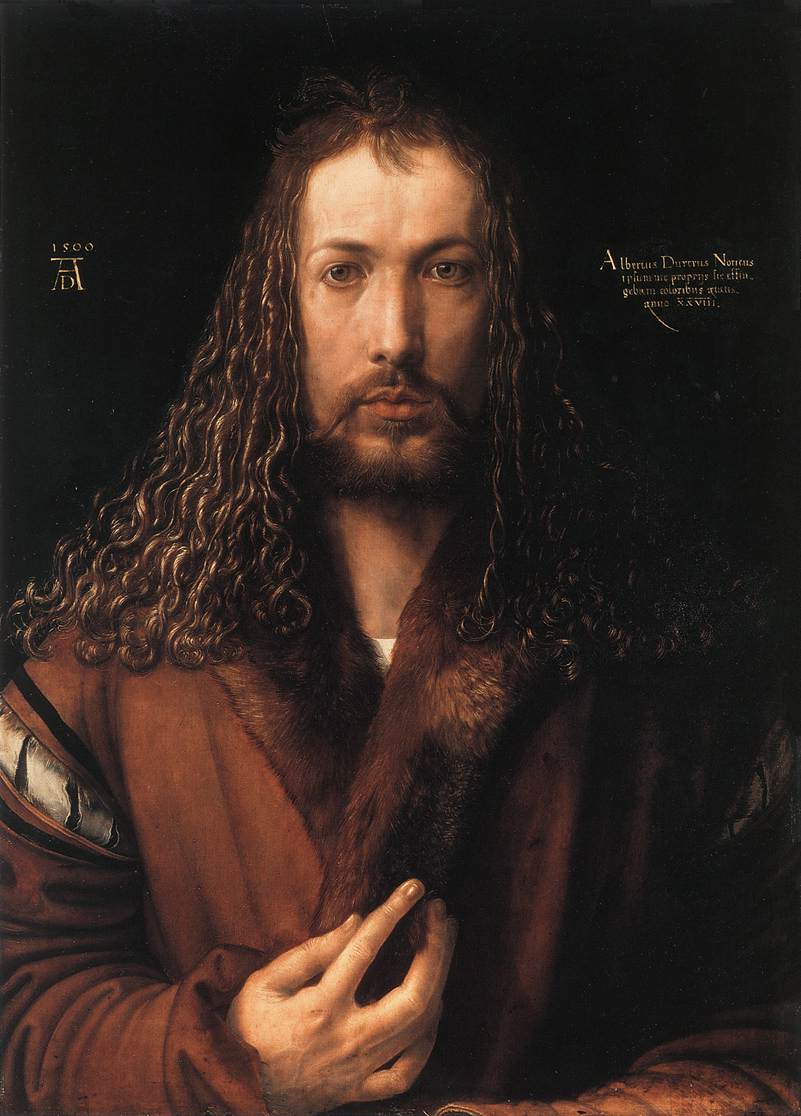
This is Durer's self portait. We didn't go into his house, but once I saw this painting, I recognized it and then knew who Durer was.

I liked this really cool half timbered house that we passed on the way to the Imperial Castle. Such neat architecture.

This statue of Saint George slaying the dragon was interesting.

Here we are at the base of the castle

I just liked the cobblestone road, ivy, and bike in this shot.

A view of the castle looming high over the city

Pretty winter berries

The castle was built into the existing stone from the mountain.

Walking through the gate.

The Imperial Castle was where the Holy Roman Emperor would stay when he was in town. It consists of 45 buildings which were almost all closed to tourists while we were there, so we just walked around and enjoyed the beautiful architecture.

Views of the castle scanning right...


Enormous sliding lock on an a huge door...


Views down on Nurnburg from the castle...


This part of the castle has been turned into a hostel. We really wanted to stay there but it was all booked. Bummer.


I just liked looking at this stone and wondering how many thousands of people have sat or slid or climbed over this rock over the centuries.

More castle views...


A beautiful church. It didn't even make it in to the guidebook, though. You know you are in a city with a lot of amazing churches if a place like this doesn't make the list...

The Hauptmarkt, or Market Square. This is where the Christmas Market is held in December and there is a market there selling fruits, flowers, souvenirs, etc. all year round. The church you see is the Frauenkirche.

This is the Beautiful Fountain (Shoner Brunnen). This fountain brought clean drinking water to the city and the fountain itself is packed with allegorical meaning.

The figures represent God being above but granting legitimacy to earthly rulers. Below the rulers are heroes and people representing the arts (Aristotle, Socrates, etc.)

We thought this was Socrates...

This woman was spinning the gold ring which locals and tourists spin three times for good luck.

I am spinning the black ring three times for fertility.

Colorful fruits and veggies in the market


We bought some absolutely delicious raspberries here.

This is the Holy Ghost Hospital which was built in the 14th century by Nurnberg's richest resident eager to do his part to help the poor...and hopefully save himself from purgatory.

This bridge, called the Meat Bridge (not a charming name), was an engineering feat when it was built in 1596. Since this is the narrowest part of the river and the likelihood of flooding is higher here, the bridge was built without any piers reducing the chance that it will collapse.

We were so cold, we decided to stop in this bakery and get some hot cocoa and some deliciousness to tide us over 'til lunch. I saw these pretzel donuts and was in love.

So many delicious pastries! Yum!!!

After warming up in the pastry shop, we headed to St. Lawrence Church. Most of the decor was donated by wealthy Nurnbergers trying to cut their time in purgatory. Once the reformation took place, this was a Lutheran church but most of the Catholic art remained.

This church was destroyed during WWII, but most of the art was hidden away or encased in cement like the huge "house of the sacraments" (an elaborate tower where the leftover communion wafers are kept).

This fancy entrance shows Adam and Eve and also shows the slaughter of the innocents with a baby skewered on a Roman sword. Not what I'd choose to carve over church doors, but then again, I didn't live in the Middle Ages.

We then walked through Old Town to catch the train to the Nazi Rallying Grounds and the Nazi Documentation Center.
Nurnberg played a huge role in the history of the Nazi party as it was the center of the Nazi movement and Hitler's largest demonstrations occurred here.
The cavernous, unfinished Congress Hall (below) is the largest surviving example of Nazi architecture. The building was planned to host the mammoth annual Nazi Party gatherings.


Today, the Congress Hall is sliced open by its modern entryway to expose the brains of the Nazi movement.

Once again, another picture of Don climbing stairs into the fascinating and terrible mind of Hitler.

When visiting Nazi sites, you wonder how something like this could happen. How could an entire nation have participated in this madness? The museum does an outstanding job to try and provide an answer. It meticulously traces the evolution of the National Socialist (Nazi) movement, focusing on how it both energized and terrified the German people. This is not a WWII or Holocaust museum, though both of those events are touched on. Instead, the exhibit honestly analyzes the Nazi phenomenon to try to shed light on how it happened - and to prevent it from happening again.

This poster shows women painting busts like the one displayed. Supporters proudly displayed these busts in their homes.

Looking in to the vast Colosseum-like courtyard in the center of the Congress Hall. The building houses the museum and the Nurnberg symphony uses one side of it for a concert hall.
I was absolutely enthralled and sickened with what we learned and saw at the Documentation Center. It was a very worthwhile and thoroughly depressing experience.

We walked from the documentation center to the rallying grounds. This is a view of the Congress Hall from across the Dutzenteich lake.

Our first view of the Zeppelin Field. This is the site of the largest Nazi rallies, including those that were filmed by Leni Riefenstahl.

We climbed up and stood on the grandstand. I was chilled thinking that Hitler stood in the same spot to survey the masses (up to 250,000 people at a time).

There used to be a huge swastika attached to the top of the Zeppelin Tribune (building along the back), but it was blown up by the Allies soon after the end of the war.


Looking across at the Zeppelin field


Some views of the sun setting over the Congress Hall

After we got back in to Nurnberg, we ate at our first beer hall, Barfusser, which is in the basement of the Old Granary where grain was a year supply of grain was stored in case of famine or siege.


People enjoying their beer and brats.

I got a funky salad which I didn't like at all, but it was still a fun time.
Then, we caught a train to Salzburg. We were the only ones on the train in first class, so it was a really nice, quiet, relaxing ride.

When we arrived in Salzburg, it was snowing. A perfect Austrian evening.

We just missed our bus out to the bed and breakfast we were staying at outside of the city so we had to wait a half hour. We walked around for awhile in the snow 'til we got too cold and then we came back and took shelter at the bus stop. A bunch of older women who had been at the ballet came to the bus stop and it made me so happy to see all these nicely dressed ladies waiting for the bus and chatting and giggling together as we rode to to the outskirts of Salzburg. I love how people get around on public transportation. Seeing these ladies made my night.

The bed and breakfast (Haus Reichl) was a good half mile walk from the bus stop and in the dark and in the snow, we got a little lost. We kept walking by it. It was out in the country, which was great, but it was about 11 pm when we got there and I felt bad we'd kept the poor woman up waiting for us.
She asked us if we needed anything and I asked for a piece of bread because I was hungry. She said she had something better and brought us warm homemade apple strudel and hot chocolate. Oh, it was heaven. It was the best bed and breakfast I've ever stayed in; the Reichls took such wonderful care of us.

Strudel! The best way a cold, snowy evening!

2 comments:
I love old churches so much. They are beautiful!! I can't believe the castle was built into the stone. Everything looks so amazing and old. I love it!
I love your picture of it snowing in salzburg.
Post a Comment